
A Critical Analysis of Arattai, Hike’s Failure, and the Network Effect Paradox
In September 2025, Zoho’s Arattai messaging app experienced what appeared to be a breakthrough moment. Daily sign-ups reportedly increased 100-fold, and the Indian tech ecosystem erupted with optimistic headlines proclaiming the arrival of a “WhatsApp killer.” But behind the media fanfare and nationalist fervor lies an uncomfortable truth: the window for Indian messaging apps to succeed domestically closed years ago, and no amount of patriotic sentiment or privacy promises will reopen it.
The story of Indian messaging apps is not one of insufficient effort or innovation. It is a story of fundamental market dynamics that no regional player can overcome without first conquering global markets—a catch-22 that has proven fatal for every Indian social platform that came before.
The Graveyard of Ambitions: Learning Nothing from Failure
Hike Messenger: The $1.4 Billion Lesson India Ignored
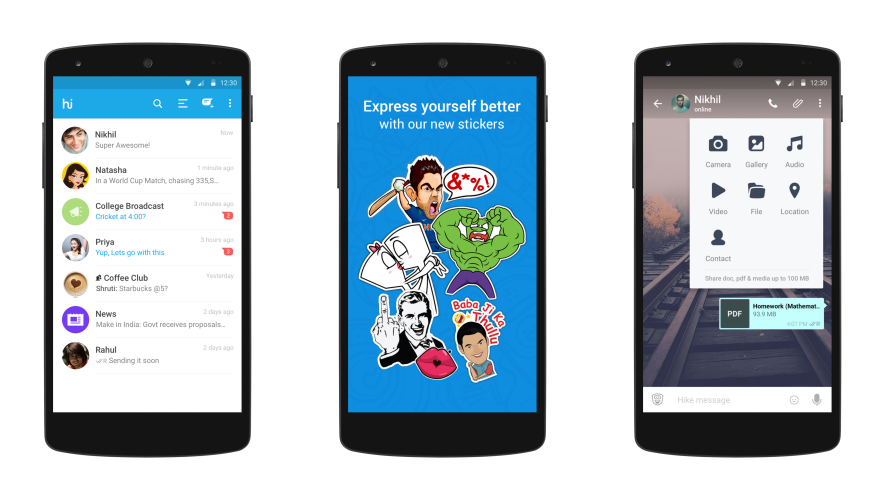
When Hike Messenger shut down in January 2021, it had reached a valuation of $1.4 billion and accumulated over 100 million registered users. On paper, these numbers suggested a thriving business. In reality, they masked a catastrophic collapse. By December 2019, the app had shrunk to just 2 million weekly active users—a user base so small it represented less than 0.5% of India’s smartphone users.
The gap between registered users and active users reveals the core problem: people downloaded Hike, tried it, and returned to WhatsApp within weeks. This wasn’t a failure of marketing or features. It was a failure to understand that messaging apps are worthless without the people you actually want to message.
WhatsApp now has over 400 million users in India and 2 billion globally. These aren’t just numbers—they represent an impenetrable fortress. Every friend, family member, colleague, and business contact is already there. The switching cost isn’t monetary; it’s social. And no Indian app has found a way to pay that price.
Koo: When Nationalism Isn’t Enough

Koo’s trajectory was even more devastating because it had everything going for it that Hike didn’t. Launched during peak anti-Twitter sentiment, backed by government endorsements, and positioned as a patriotic alternative during a geopolitically charged moment, Koo should have succeeded if national pride could drive app adoption.
Instead, active users plummeted from 7.2 million in June 2023 to just 2.7 million nine months later—a 62% collapse. The platform shut down in July 2024 due to financial difficulties after failing to find a buyer. The Indian government, political leaders, and millions of citizens may have created accounts to support a “Made in India” platform, but they didn’t stay. When the novelty wore off and the initial controversy faded, users returned to Twitter (now X) because that’s where the conversations were happening.
Koo saw 2.6 million installs from Indian app stores in 2020, compared to 28 million installs for Twitter—a 10:1 disadvantage from the start. Even during peak promotion and controversy, Koo couldn’t match Twitter’s organic growth in India.
The Network Effect Death Spiral
The fundamental problem facing Arattai and any future Indian messaging app is what economists call the network effect—and it works exponentially against late entrants.
A messaging app with 100 users is worthless. A messaging app with 100,000 users is interesting. A messaging app with 100 million users is valuable. A messaging app with 2 billion users is irreplaceable.
WhatsApp doesn’t need to be better than Arattai. It doesn’t need to innovate. It doesn’t need to advertise. It simply needs to exist, because everyone you want to talk to is already there. This creates a compounding advantage that grows stronger with time, not weaker.
Consider the actual behavior of an Indian user evaluating Arattai:

Day 1: Downloads Arattai out of curiosity or patriotic sentiment. Finds a clean interface and decent features.
Day 3: Realizes their parents, siblings, and best friends aren’t on it. Sends them invitation links.
Day 5: Half of their contacts ignore the invitation. The other half download it but don’t use it because their other friends aren’t there.
Day 7: Gets a message on WhatsApp from someone they’re trying to reach. Responds on WhatsApp because it’s easier.
Day 14: Opens Arattai once or twice a day. Opens WhatsApp forty times a day.
Day 30: Stops opening Arattai entirely.
This isn’t speculation. This is exactly what happened with Hike’s 100 million registered users who disappeared into the void. It’s what happened with Koo’s millions of politically motivated downloads that evaporated within months.
What Arattai Actually Offers: Incremental Features That Don’t Justify Switching
Media coverage has highlighted five areas where Arattai supposedly beats WhatsApp, but a closer examination reveals how underwhelming these advantages actually are:
1. India-Based Servers and Data Sovereignty
Arattai stores all data on servers in India, positioning this as a privacy advantage over WhatsApp’s international infrastructure. For nationalist messaging, this sounds compelling. For actual user behavior, it’s irrelevant.
The average Indian WhatsApp user doesn’t know where their data is stored and doesn’t care. They care about whether their messages deliver, whether calls connect, and whether their contacts are reachable. Data sovereignty is a government talking point, not a user pain point.
More critically, India-based servers create a vulnerability rather than an advantage. A messaging app needs global infrastructure to handle international calls, ensure reliability across regions, and provide redundancy during outages. WhatsApp’s distributed architecture makes it more resilient, not less secure.
2. Selective Encryption: A Critical Weakness Disguised as a Feature
Here’s where Arattai’s positioning becomes misleading. While media coverage emphasizes its encryption capabilities, the reality is more concerning: regular chats are not end-to-end encrypted by default. Only voice/video calls and optional “secret chats” have encryption.
WhatsApp encrypts everything by default—every message, every call, every status update. Users never think about it because it’s automatic. Arattai requires users to actively choose “secret chat” mode for encrypted text conversations, adding friction to basic privacy.
This isn’t an advantage. It’s a regression to pre-2016 WhatsApp standards, repackaged as user choice. The vast majority of users will never enable secret chats, leaving their messages vulnerable in ways that WhatsApp messages haven’t been in nine years.
3. Location Sharing “Until Destination”
Arattai offers a feature to share your live location until you reach a specific destination, rather than WhatsApp’s time-based sharing (1, 8, or 24 hours). This is genuinely innovative and solves a real use case—knowing when someone arrives rather than guessing timing.
It’s also completely insufficient to drive platform switching. This is a feature that could be added to WhatsApp in a single update. It’s nice to have, not transformative. Nobody is convincing their entire family to download a new app so they can share location-until-destination instead of location-for-8-hours.
4. Multi-Device Independence
Arattai allows you to use the app on multiple devices without requiring the primary phone to be online—a capability WhatsApp only recently implemented and still handles imperfectly. This is a genuine technical advantage that improves user experience.
But again, it’s an incremental improvement to an already-solved problem. WhatsApp’s multi-device support works well enough for the vast majority of users. Those who need better multi-device functionality have already migrated to Telegram. Arattai is arriving with a solution to a problem that’s already been addressed by existing alternatives.
5. Low-Bandwidth Optimization
Arattai has optimized its voice and video calls for low-bandwidth networks, making it more reliable in areas with weak connectivity. Given India’s infrastructure challenges, this is perhaps the most practically useful advantage.
WhatsApp has had nearly a decade to optimize for Indian network conditions and has done so extensively. It works in weak signal areas because Meta has invested billions in infrastructure and optimization. Arattai’s advantage here is marginal at best and will shrink further as WhatsApp continues improving.
The Feature Trap
All of these “advantages” share a fatal flaw: they’re features, not networks. They can be copied, improved, or rendered obsolete by competitors with vastly more resources. What they can’t do is create the social graph that makes a messaging app indispensable.
WhatsApp doesn’t need location-sharing-until-destination to remain dominant. It needs everyone you know to already be using WhatsApp. That’s not a feature. That’s an unassailable moat.
The Global-First Imperative: Why India Can’t Be the Starting Point

Here’s the paradox that Indian entrepreneurs refuse to accept: you cannot build a successful messaging app by targeting India first. The strategy must be inverted.
Look at the success stories:
WhatsApp reached critical mass in Europe and the US before expanding to India. By the time it arrived, it was already the global standard.
WeChat dominated China—a closed market of 1.4 billion users with government protection from foreign competition—before attempting international expansion (where it largely failed).
Telegram built a global user base of privacy-conscious users before becoming popular in specific regional markets.
Signal cultivated a devoted international community of security-focused users before achieving broader adoption.
The pattern is clear: messaging apps succeed by becoming indispensable in their initial market, then expanding to other regions where users want to connect with people in that first market. Indians WhatsApp because they want to message family members who moved to the US, UK, or Middle East. They use Instagram to follow global creators. They use Twitter/X to engage with international conversations.
An India-only messaging app has no expansion vector. Who outside India would download Arattai? For what purpose? To message their one Indian friend? They’ll just use WhatsApp for that because they’re already using WhatsApp for everyone else.
The International Apps Indians Actually Use: A Reality Check
Let’s examine what actually drives app adoption in India with cold, hard numbers:
Gmail dominates Indian email because it dominated email globally first. Rediffmail and other Indian alternatives exist but command tiny market shares.
Instagram became India’s second-largest market (after the US) with hundreds of millions of users, despite having no India-specific features for years.
Snapchat struggled in India precisely because it went global elsewhere first and Indians found it unnecessary when Instagram Stories provided the same functionality.
Twitter/X maintains relevance in India despite Koo’s best efforts because global conversations happen there. Indian politicians, celebrities, and journalists use it because that’s where international audiences exist.
YouTube is India’s default video platform because it’s the world’s default video platform.
The pattern isn’t that Indians prefer American apps. The pattern is that Indians, like everyone else, prefer global apps because they enable global connections and provide access to global content. A messaging app can’t offer those benefits while remaining India-focused.
The Messaging Ecosystem in 2025: A Mature Market with Zero Room
The messaging landscape of 2025 bears no resemblance to 2012 when Hike launched or even 2015 when WhatsApp was still establishing dominance in India.
Today’s reality:
- Every smartphone user already has multiple messaging apps installed
- Every social relationship is already mapped onto existing platforms
- Business communications have standardized around WhatsApp Business
- Group chats have years of history that can’t be migrated
- Payment systems, booking services, and e-commerce have integrated with established platforms
- Muscle memory and user habits are deeply entrenched
This isn’t a market where you can offer 10% better features and expect people to switch. This is a market where you’d need to be 10x better—and even then, the switching costs are probably too high for most users.
Signal provides genuinely superior privacy and open-source transparency. It’s backed by respected cryptographers and has no commercial incentives to compromise user data. Yet it remains a niche app globally because being significantly better doesn’t overcome the network effect of WhatsApp.
If Signal can’t do it with legitimate technical superiority, what chance does Arattai have with “privacy-focused” marketing and an Indian origin story?
The False Dawn: Why Media Coverage Doesn’t Equal Success
Arattai experienced a surge in adoption in September 2025, with daily sign-ups increasing 100-fold. Indian media covered this extensively, often with nationalist framing and optimistic projections.
We’ve seen this before. We know how it ends.
Media coverage drives downloads. It doesn’t drive sustained usage. Koo received extensive press coverage, government endorsements, and passionate support from “Atmanirbhar Bharat” advocates. Within 18 months, it was laying off staff and shutting down.
The September 2025 spike in Arattai signups likely reflects:
- Curiosity from tech enthusiasts who will churn within weeks
- Nationalist sentiment that drives installation but not usage
- Media coverage creating temporary awareness that fades quickly
- Potential controversy or government promotion creating artificial momentum
What matters isn’t Day 1 signups. What matters is Day 90 daily active users. And history suggests that number will be depressingly small relative to the initial spike.
What Would Actually Work (But Won’t Happen)
For an Indian messaging app to succeed, it would need to execute a strategy that no Indian company has attempted:
1. Global-First Launch
Target the US, Europe, or select international markets first. Build critical mass with English-speaking users who can drive global network effects. Only then expand to India, positioning the app as a global platform that Indians can join rather than an Indian platform that others should try.
2. Killer Feature for Specific Niche
Identify a use case that existing apps handle poorly and build obsessively around it. Gaming integration? Professional networking? Anonymous communities? Event coordination? The feature must be so compelling that users adopt the app for that purpose despite lacking their full social graph.
3. Acquisition Strategy
Accept that you can’t beat WhatsApp at being WhatsApp. Instead, build something adjacent—a group video platform, a communities-first network, a business coordination tool—and position yourself as complementary rather than competitive. Make yourself acquisition-worthy rather than dominant.
4. Regional Domination Outside India
Paradoxically, an Indian company might have better success launching first in Bangladesh, Sri Lanka, Pakistan, Nepal, or other South Asian markets where WhatsApp adoption is still growing. Establish regional dominance, then pressure Indian users to join to communicate with contacts in those markets.
None of these strategies align with the “Made in India, for India” positioning that gets media attention and government support. Which is why they won’t be attempted. And why the next Indian messaging app will fail just like Hike and Arattai.
The Hard Truth: National Pride Doesn’t Drive Daily Behavior
Indians want to support Indian companies. They want technological self-reliance. They want alternatives to American tech giants. These sentiments are genuine and deeply felt.
But they don’t open apps.
What opens apps is:
- A message from your mother
- Your work group chat being active
- Your friend sharing photos
- Breaking news in your community group
- A funny video someone forwarded
All of these happen on WhatsApp today. And they will continue happening on WhatsApp tomorrow, regardless of how many times users download Arattai to feel patriotic.
The tragedy of Indian messaging apps isn’t that they lack features, funding, or technical capability. The tragedy is that they’re trying to solve a problem that no longer exists. The messaging market consolidated years ago. The window closed. Network effects locked in.
Conclusion: The Era of Global Apps is Permanent
Arattai was first launched in January 2021 as a beta “friends-and-family trial” and has been refined over four years. Zoho is a legitimate, profitable, global software company with real engineering talent. If any Indian company could succeed at building a messaging app, it should be Zoho.
But it won’t. Not because Arattai is bad, but because the game is already over.
We live in an era of global apps. WeChat succeeded in China because China’s government gave it a closed market of 1.4 billion users and banned competition. Line succeeded in Japan and Taiwan through early timing before global consolidation. Every other regional messaging app attempt has failed, regardless of country of origin.
Indian apps can succeed globally by going global first. Indian apps cannot succeed by attempting domestic displacement of entrenched global platforms. The sooner Indian entrepreneurs accept this reality and redirect their considerable talents toward globally competitive products rather than import-substitution clones, the better India’s actual tech ecosystem will become.
Until then, expect more headlines about the next WhatsApp killer, followed by quiet shutdowns 18-24 months later. The graveyard of Indian messaging apps will continue growing, one patriotic failure at a time.
A Founder’s Perspective: Why We Keep Failing at This
As an Indian tech co-founder, I desperately want to see Indian apps beat global players. The talent exists. The market exists. The engineering capability exists. But we keep making the same strategic mistake, over and over again.
We launch something overnight, issue press releases designed to polarize some audience with nationalist rhetoric, generate temporary buzz, and genuinely believe we’ve changed the world. This approach can’t work. It has never worked. It will never work.
The R&D Gap Nobody Wants to Acknowledge
WhatsApp spent years in stealth mode perfecting their messaging infrastructure before achieving product-market fit. They invested heavily in server architecture, encryption protocols, and cross-platform consistency. When they scaled to billions of users, they had the technical foundation to handle it.
Signal is backed by a foundation that invests millions in cryptographic research and open-source development. Their protocol has become the industry standard not through marketing, but through rigorous peer review and continuous improvement.
Telegram built its entire infrastructure from scratch, including custom MTProto protocol and a globally distributed server network. They spent years without monetization, focusing purely on technical excellence and user experience.
Compare this to the Indian approach: announce the product, ship the MVP, organize a media blitz, wait for downloads, and hope network effects materialize through patriotic sentiment. There’s no long-term technical vision. No ecosystem thinking. No patient capital willing to invest in R&D without immediate returns.
Ecosystem Investment: The Unsexy Truth
Building a messaging platform isn’t just about the app. It requires:
- Developer APIs and third-party ecosystem – WhatsApp Business API generates billions in revenue while creating value for millions of SMEs
- Cross-platform consistency – Years of investment ensuring identical experiences across iOS, Android, Web, Desktop
- Infrastructure resilience – Global server distribution, redundancy, edge caching, and bandwidth optimization
- Security research – Continuous investment in threat modeling, vulnerability patching, and protocol improvements
- Accessibility features – Supporting users with disabilities across all platforms
- Localization at scale – Not just language translation, but cultural adaptation across hundreds of markets
Indian apps skip all of this. They build a functional messaging client, add some features from a competitor’s roadmap, and call it innovation. Then they wonder why users don’t stick around.
The Polarization Trap
Every Indian social app launch follows the same playbook: frame it as a nationalist alternative, get government figures to endorse it, generate controversy about foreign apps, and ride the wave of anger or pride.
This creates initial downloads. It creates media attention. It creates the illusion of momentum.
What it doesn’t create is sustained usage. Because anger fades. Novelty wears off. And when users need to actually communicate with their friends, family, and colleagues, they open the app where those people are—which is never the new nationalist alternative.
Koo got government ministers to join. It got political endorsements. It got headlines during peak anti-Twitter sentiment. And it still shut down because Twitter’s network effect was insurmountable. The same will happen to Arattai, regardless of how many press releases emphasize its Indian origin.
What Real Commitment Looks Like
If India is serious about building messaging apps that compete globally, we need a fundamentally different approach:
10-year vision, not 10-month hype cycles. Accept that building global platforms takes a decade of patient capital, continuous R&D, and iterative improvement.
Invest in infrastructure, not marketing. Spend money on server architecture, security research, and developer tools—not on ad campaigns telling people to be patriotic.
Build for the world, not for India. Target international markets first, establish credibility globally, then expand to India from a position of strength.
Focus on specific use cases. Don’t try to be WhatsApp. Be the best app for gaming communities, or professional collaboration, or anonymous support groups. Dominate a niche, then expand.
Open-source the hard parts. Build credibility through technical transparency. Let the global developer community audit, improve, and contribute to your protocols.
None of this is sexy. None of this generates next-day headlines. None of this lets founders claim they’ve revolutionized communication.
But it’s the only approach that has ever worked.
The Uncomfortable Question
Here’s what I ask myself as someone who wants Indian tech to succeed: Are we actually trying to build world-class products, or are we just trying to capture nationalist sentiment for short-term gain?
Because if we’re serious about competing globally, we need to match the commitment, patience, and technical excellence of companies that spent 5-10 years in relative obscurity before achieving dominance. We need to accept that there are no shortcuts around network effects. We need to stop believing that media coverage equals product-market fit.
And most importantly, we need to be honest about what it takes to build a messaging app that people actually want to use—not just download to feel patriotic.
Until Indian entrepreneurs internalize these lessons, we’ll keep seeing the same pattern: launch with fanfare, pivot desperately when growth stalls, shut down quietly, repeat. The talent isn’t the problem. The technology isn’t the problem. The strategy is the problem.
And we keep refusing to fix it.
Data Summary:
| App | Peak Users (India) | Current Status | Years Active | Outcome |
|---|---|---|---|---|
| Hike | 100M registered, 2M active | Shut down Jan 2021 | ~8 years | Failure |
| Koo | 7.2M active (peak) | Shut down Jul 2024 | ~4 years | Failure |
| Arattai | Unknown (recent spike) | Active as of Oct 2025 | 4+ years | TBD |
| 400M+ India, 2B+ global | Dominant | 15+ years | Success |
Feature Comparison Reality Check:
| Feature | Arattai | Advantage? | |
|---|---|---|---|
| Default E2E Encryption | All messages/calls | Only calls/secret chats | WhatsApp wins decisively |
| Multi-device support | Yes (phone-independent) | Yes (phone-independent) | Parity |
| Location sharing | Time-based | Destination-based | Marginal Arattai edge |
| Data storage | Global servers | India-only servers | Irrelevant to users |
| Network effect | 2B global, 400M India | <1M active (estimated) | WhatsApp wins overwhelmingly |
The pattern speaks for itself. Being Indian isn’t enough. Being privacy-focused (selectively) isn’t enough. Having destination-based location sharing isn’t enough. In the age of network effects, being first and global is everything.
Disclaimer: All opinions expressed in this article are personal views of the author. All trademarks, product names, and images belong to their respective owners.