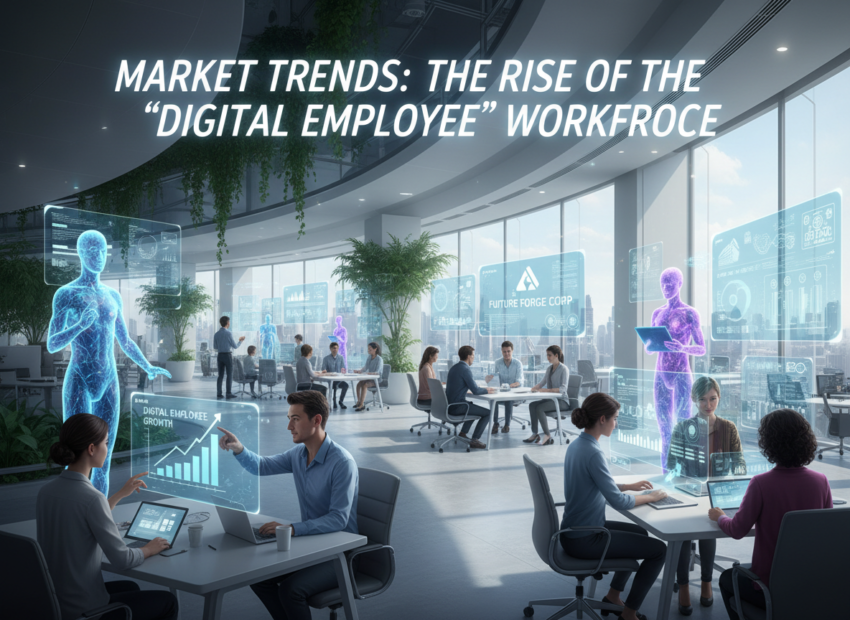
Remember when SaaS was just “software you didn’t have to install”? Simple, right? Well, buckle up, because the next 5-10 years are going to redefine everything we know about cloud software. We’re moving from helpful digital tools to an era of autonomous digital employees. And it’s going to be a wild, efficient, and sometimes a little bit unnerving ride!
Let’s dive into what’s coming, with some real-world examples to make it stick.
The Numbers Game: From Billions to Trillions
First, the big picture: The global SaaS market, which is around $465 billion today, is projected to hit nearly $1.4 trillion by 2035. That’s a staggering jump, and it’s not just about more of the same. It’s about a fundamental shift in how businesses operate.
1. The Architectural Divide: Is Your SaaS “AI-Enabled” or “Native-AI”?
This is the most critical distinction. Most SaaS products today are “AI-enabled.” Think of it like this:
- “AI-Enabled” (The Past/Present): Imagine your current CRM. They’ve added a button that says “Generate Email with AI.” You click it, the AI helps you draft an email, but you still have to send it, track it, and follow up. The AI is a co-pilot, a feature.
- Example: Using ChatGPT to draft a marketing email, then copying and pasting it into Mailchimp. You’re still doing the work, AI is just assisting.
- “Native-AI” (The Future): This is where it gets interesting. These are systems built from the ground up for agents, not just human users. You don’t “log in” to do work; you deploy a “Digital Employee” that does the work for you.
- Example: Instead of a sales rep drafting an email, a “Sales Agent” monitors your lead pipeline, identifies a warm lead, drafts a personalized email, sends it, schedules a follow-up if no response, and updates the CRM—all autonomously. You just get a notification: “Lead X engaged, meeting booked.”
- Think: Less “SaaS app with AI features” and more “AI that uses SaaS apps as its tools to get work done.”
2. The End of “Per-Seat” Pricing: Paying for Outcomes, Not People
This is huge for businesses and SaaS vendors alike. For decades, we’ve paid for SaaS based on how many people use it (e.g., “$50 per user per month”). But what happens when an AI “Digital Employee” can do the work of 10 human employees? Suddenly, you only need one “seat” for the human overseeing the AI. That breaks the traditional SaaS business model.
- The Future: Get ready for Outcome-Based Pricing or Consumption-Based Pricing.
- Example: Instead of paying $100/month per customer service agent, you might pay $1 per “Successful Customer Resolution” handled by an AI, or $5 per “Qualified Lead Generated” by your AI sales assistant.
- Why it matters: This forces SaaS providers to truly deliver value. If their AI isn’t getting outcomes, they don’t get paid.
3. Verticalization: Deeper, Not Wider
The “horizontal” SaaS giants like Salesforce that try to be everything for everyone are still powerful, but the future growth is in Vertical SaaS. This means software built specifically for one very niche industry.
- Example 1: Instead of a generic project management tool, think “SaaS for managing the logistics and compliance of organic avocado farms.”
- Example 2: Software tailored for veterinary clinics, including specific animal health records, vaccine schedules, and pet owner communication tools.
- Why it works: These tools come “out of the box” with industry-specific compliance (HIPAA for healthcare, GDPR for Europe), workflows, and terminology. This drastically cuts down on customization time and costs, offering a much higher ROI for specialized businesses.
4. Market Trends: The Rise of the “Digital Employee” Workforce
Here’s a snapshot of how our relationship with software will change:
- Workforce: From “Human-led with AI help” to a Hybrid model where human “Orchestrators” oversee fleets of AI agents doing the heavy lifting. Your job might become more about designing workflows for AI than executing them yourself.
- Interaction: Say goodbye to endless dashboards and complex menus. The future is Natural Language & Zero-UI. You’ll tell your digital employee what you need, and it’ll get done. Voice commands, simple chat interfaces, or even just data flowing seamlessly in the background.
- Integration: APIs are clunky. The future is Model Context Protocol (MCP), where different AI agents (e.g., your sales agent and your marketing agent) can communicate directly, share context, and coordinate tasks across different applications without you building complex integrations.
- Security: We’re used to securing human access. But what about when AI agents are processing sensitive data? We’ll need Identity-for-Agents, managing the permissions and audit trails of these non-human “workers.”
5. Global Shifts: APAC Takes the Lead
While North America still holds the largest chunk of the SaaS pie, Asia-Pacific (APAC) is exploding. Countries like India, China, and Southeast Asia are seeing massive investments and innovation in localized SaaS solutions. This means more competition, diverse offerings, and potentially lower customer acquisition costs (CAC) for companies operating in these regions.
The Bottom Line: Efficiency, Not Just Growth
The core message for the next decade is “Efficiency over Growth.” Investors are no longer just chasing user numbers; they want to see measurable impact and profitability. SaaS companies that can deliver real, demonstrable ROI through autonomous, outcome-driven solutions will be the ones that thrive.
It’s an exciting time to be in tech. We’re not just building tools anymore; we’re building a new kind of workforce. Get ready to automate, delegate, and watch your “digital employees” revolutionize how you do business!
What do you think? Is your business ready for the rise of the autonomous digital employee? Let me know in the comments!
Remember when SaaS was just “software you didn’t have to install”? Simple, right? Well, buckle up, because the next 5-10 years are going to redefine everything we know about cloud software. We’re moving from helpful digital tools to an era of autonomous digital employees. And it’s going to be a wild, efficient, and sometimes a little bit unnerving ride!
Let’s dive into what’s coming, with some real-world examples to make it stick.
The Numbers Game: From Billions to Trillions
First, the big picture: The global SaaS market, which is around $465 billion today, is projected to hit nearly $1.4 trillion by 2035. That’s a staggering jump, and it’s not just about more of the same. It’s about a fundamental shift in how businesses operate.
1. The Architectural Divide: Is Your SaaS “AI-Enabled” or “Native-AI”?
This is the most critical distinction. Most SaaS products today are “AI-enabled.” Think of it like this:
- “AI-Enabled” (The Past/Present): Imagine your current CRM. They’ve added a button that says “Generate Email with AI.” You click it, the AI helps you draft an email, but you still have to send it, track it, and follow up. The AI is a co-pilot, a feature.
- Example: Using ChatGPT to draft a marketing email, then copying and pasting it into Mailchimp. You’re still doing the work, AI is just assisting.
- “Native-AI” (The Future): This is where it gets interesting. These are systems built from the ground up for agents, not just human users. You don’t “log in” to do work; you deploy a “Digital Employee” that does the work for you.
- Example: Instead of a sales rep drafting an email, a “Sales Agent” monitors your lead pipeline, identifies a warm lead, drafts a personalized email, sends it, schedules a follow-up if no response, and updates the CRM—all autonomously. You just get a notification: “Lead X engaged, meeting booked.”
- Think: Less “SaaS app with AI features” and more “AI that uses SaaS apps as its tools to get work done.”
2. The End of “Per-Seat” Pricing: Paying for Outcomes, Not People
This is huge for businesses and SaaS vendors alike. For decades, we’ve paid for SaaS based on how many people use it (e.g., “$50 per user per month”). But what happens when an AI “Digital Employee” can do the work of 10 human employees? Suddenly, you only need one “seat” for the human overseeing the AI. That breaks the traditional SaaS business model.
- The Future: Get ready for Outcome-Based Pricing or Consumption-Based Pricing.
- Example: Instead of paying $100/month per customer service agent, you might pay $1 per “Successful Customer Resolution” handled by an AI, or $5 per “Qualified Lead Generated” by your AI sales assistant.
- Why it matters: This forces SaaS providers to truly deliver value. If their AI isn’t getting outcomes, they don’t get paid.
3. Verticalization: Deeper, Not Wider
The “horizontal” SaaS giants like Salesforce that try to be everything for everyone are still powerful, but the future growth is in Vertical SaaS. This means software built specifically for one very niche industry.
- Example 1: Instead of a generic project management tool, think “SaaS for managing the logistics and compliance of organic avocado farms.”
- Example 2: Software tailored for veterinary clinics, including specific animal health records, vaccine schedules, and pet owner communication tools.
- Why it works: These tools come “out of the box” with industry-specific compliance (HIPAA for healthcare, GDPR for Europe), workflows, and terminology. This drastically cuts down on customization time and costs, offering a much higher ROI for specialized businesses.
4. Market Trends: The Rise of the “Digital Employee” Workforce
Here’s a snapshot of how our relationship with software will change:
- Workforce: From “Human-led with AI help” to a Hybrid model where human “Orchestrators” oversee fleets of AI agents doing the heavy lifting. Your job might become more about designing workflows for AI than executing them yourself.
- Interaction: Say goodbye to endless dashboards and complex menus. The future is Natural Language & Zero-UI. You’ll tell your digital employee what you need, and it’ll get done. Voice commands, simple chat interfaces, or even just data flowing seamlessly in the background.
- Integration: APIs are clunky. The future is Model Context Protocol (MCP), where different AI agents (e.g., your sales agent and your marketing agent) can communicate directly, share context, and coordinate tasks across different applications without you building complex integrations.
- Security: We’re used to securing human access. But what about when AI agents are processing sensitive data? We’ll need Identity-for-Agents, managing the permissions and audit trails of these non-human “workers.”
5. Global Shifts: APAC Takes the Lead
While North America still holds the largest chunk of the SaaS pie, Asia-Pacific (APAC) is exploding. Countries like India, China, and Southeast Asia are seeing massive investments and innovation in localized SaaS solutions. This means more competition, diverse offerings, and potentially lower customer acquisition costs (CAC) for companies operating in these regions.
The Bottom Line: Efficiency, Not Just Growth
The core message for the next decade is “Efficiency over Growth.” Investors are no longer just chasing user numbers; they want to see measurable impact and profitability. SaaS companies that can deliver real, demonstrable ROI through autonomous, outcome-driven solutions will be the ones that thrive.
It’s an exciting time to be in tech. We’re not just building tools anymore; we’re building a new kind of workforce. Get ready to automate, delegate, and watch your “digital employees” revolutionize how you do business!
What do you think? Is your business ready for the rise of the autonomous digital employee? Let me know in the comments!